
Crowns & bridges
Single units and spans, milled and characterised in-house.
- Materials
- Zirconia, lithium disilicate
Services
Every restoration is designed and milled in our own laboratory. Turnaround is quoted as laboratory working days plus transit, never as a single blended figure.
Single units and spans, milled and characterised in-house.
Minimal-preparation and conventional, layered or pressed.
Screw-retained and cement-retained, on stock or custom abutments.
Provisional through to definitive, with a verified fit stage.
Hard, soft and dual-laminate, printed or milled to the scan.
Milled bases and printed try-ins from a digital record.
Straight from scan to restoration where the case allows it.
12 — Materials
Material choice is a clinical decision, not a menu preference. This is what each class does well, and where it stops being the right answer.
Monolithic and layered
The default for posterior work where load matters more than translucency. Monolithic zirconia takes occlusal force without a ceramic layer to chip, which is why it survives bruxism cases that layered work does not. Modern multi-layer discs recover much of the translucency the early generations lacked.
Indications
Pressed or milled
The anterior answer when the restoration has to disappear next to natural teeth. It etches and bonds adhesively, so it suits minimal-preparation work where retention comes from the bond rather than the shape of the preparation.
Indications
Bars, abutments and substructures
Used where the restoration meets the implant. Custom abutments are milled to the emergence profile the case needs rather than compromising around a stock component, and full-arch bars are milled from a single blank so there is no cast join to fail.
Indications
Provisional and diagnostic
Milled from the same scan as the definitive restoration, so a provisional is a genuine rehearsal rather than an approximation. Long-term provisionals let a full-arch case be tested in function before anything is committed to zirconia or titanium.
Indications
Batch and manufacturer are recorded against every case, so a remake starts from the original record rather than a fresh set of assumptions.
14 — Crowns
A crown is judged at conversational distance and then again at arm's length under a surgery light. These are the details that decide whether it reads as a tooth or as dentistry.
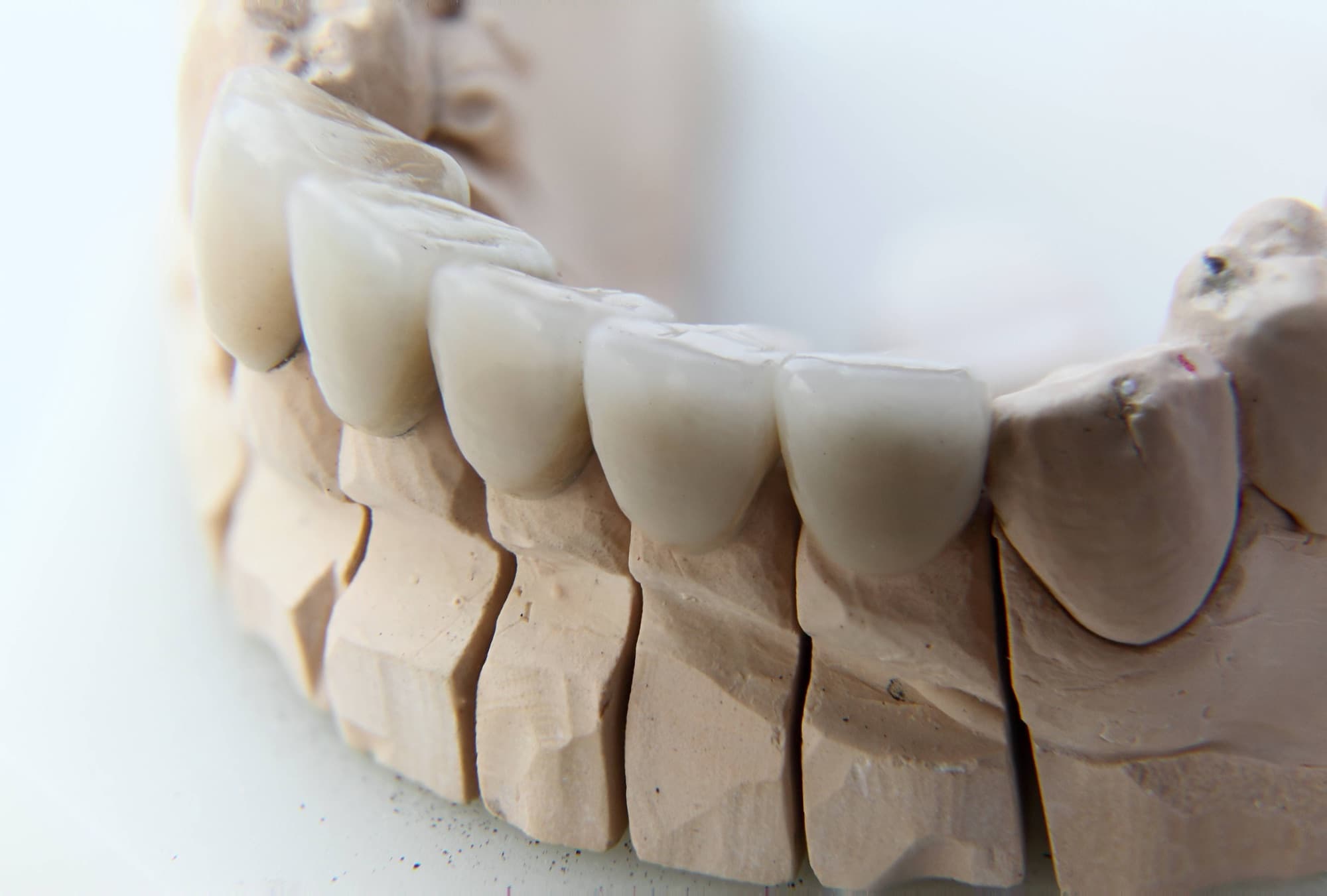
Layered ceramic over a metal substructure. The gradient from cervical to incisal is built in layers, not painted on at the end.
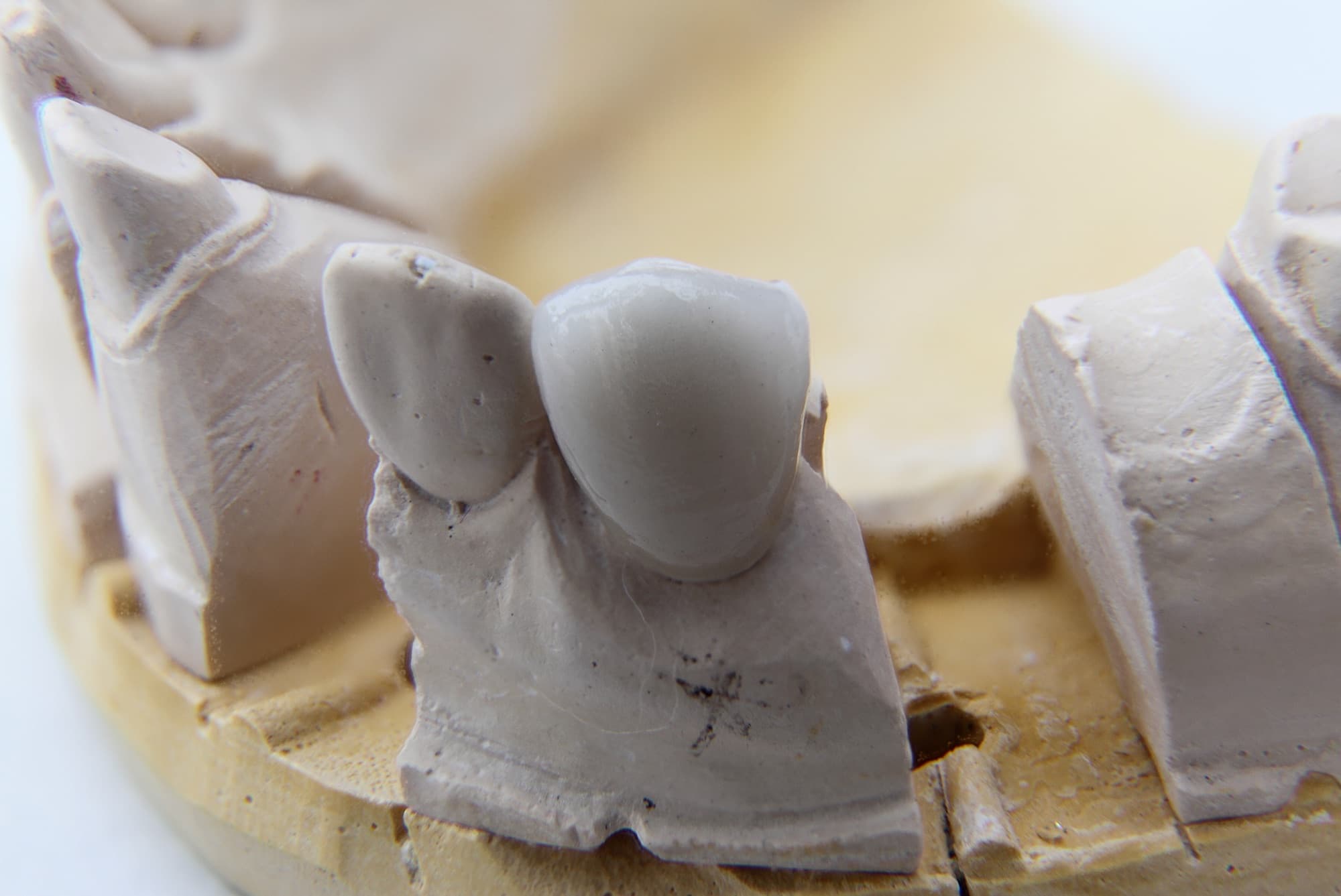
The incisal third is where a crown gives itself away. Too opaque and it reads flat; too translucent and it greys against the dark of the mouth.
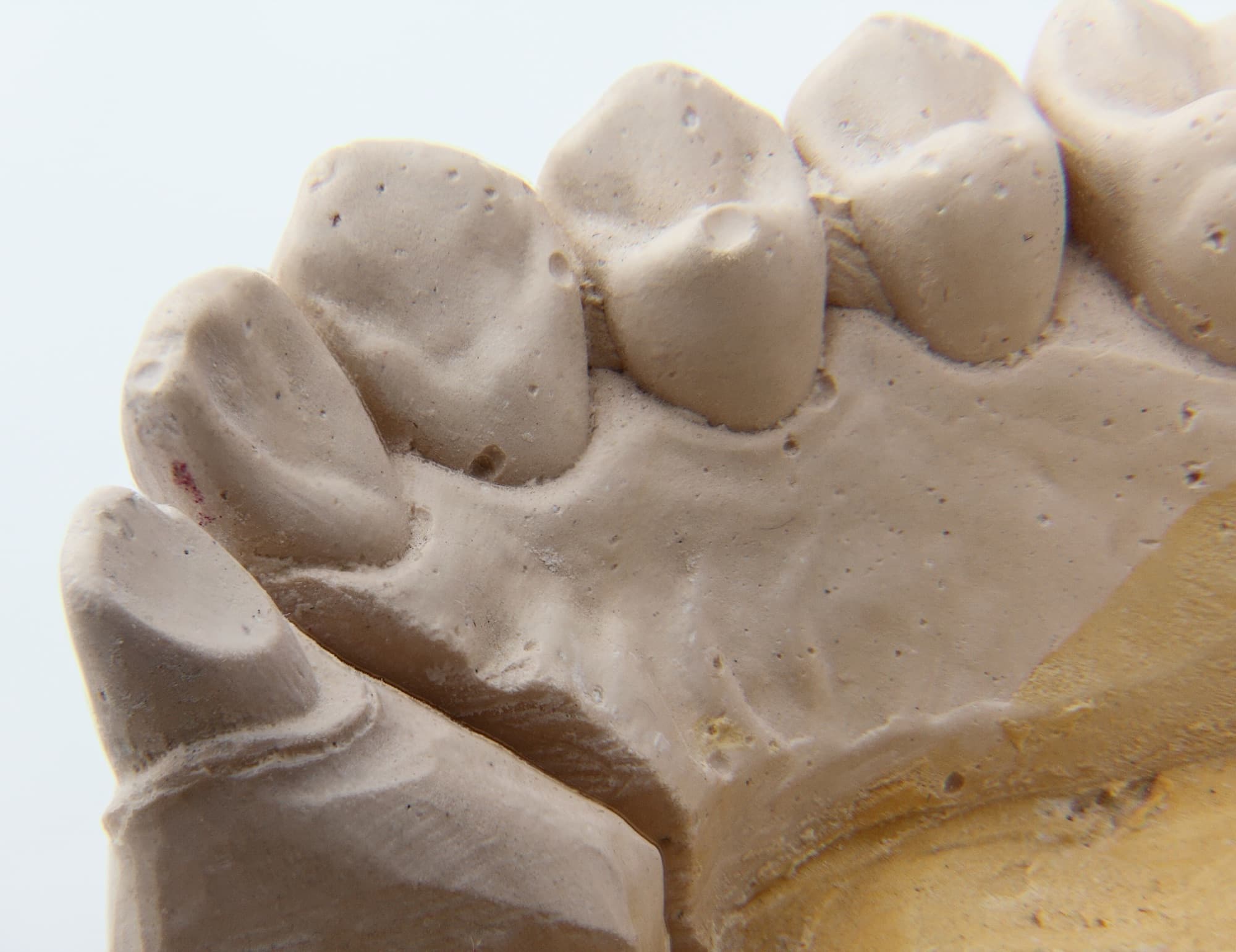
The margin is the join a patient never sees and a periodontist always does. It is checked on the model before the case is allowed to leave.
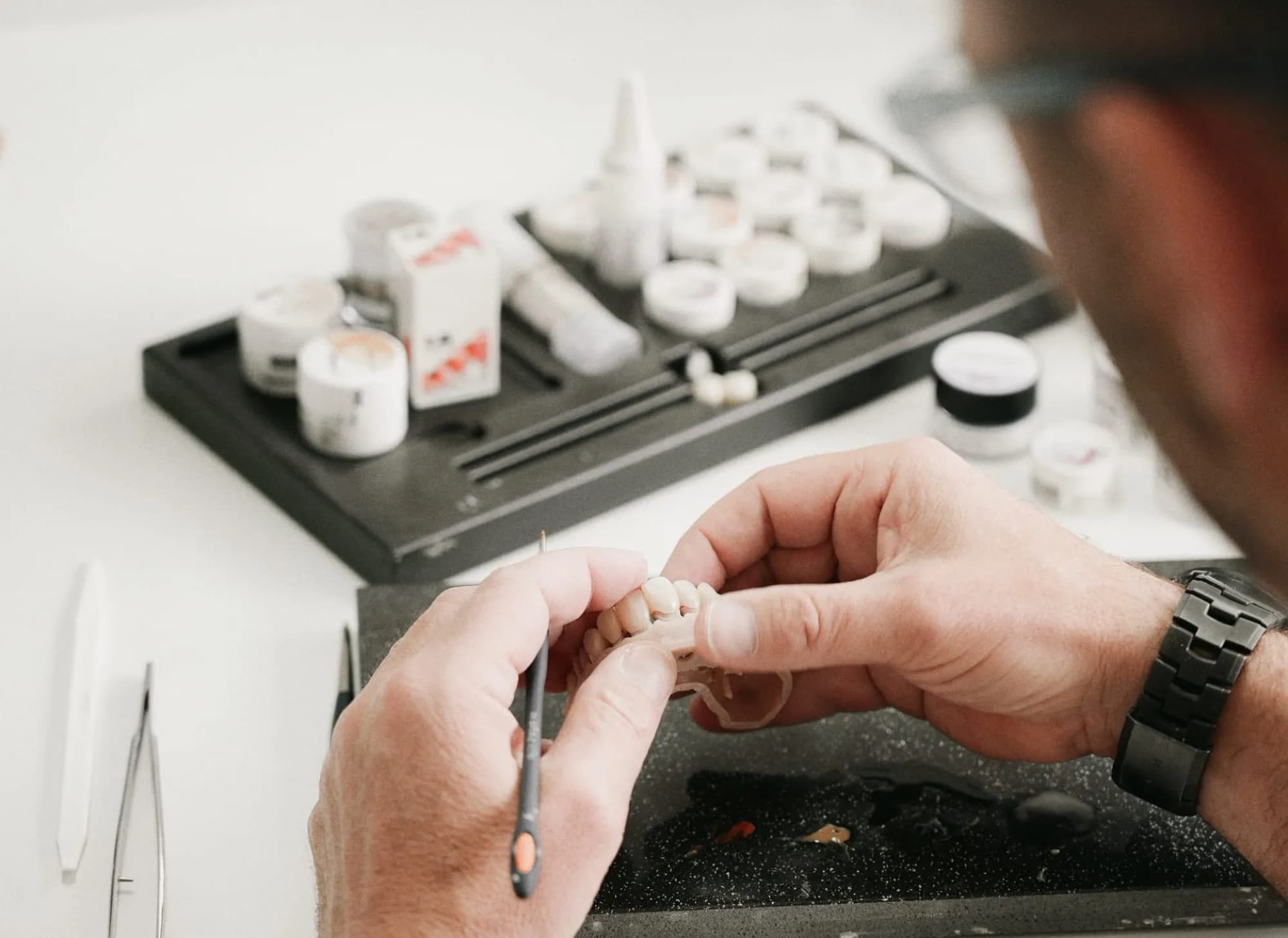
Milling gets the geometry right. Surface texture, line angles and polish are still done by a technician with a brush and a rubber wheel.
Shipping
We are a laboratory in Georgia serving practices abroad, so the shipping question deserves a straight answer rather than a footnote.
Tell us what you work with and we will come back with pricing, scanner connection details and a first-case checklist.